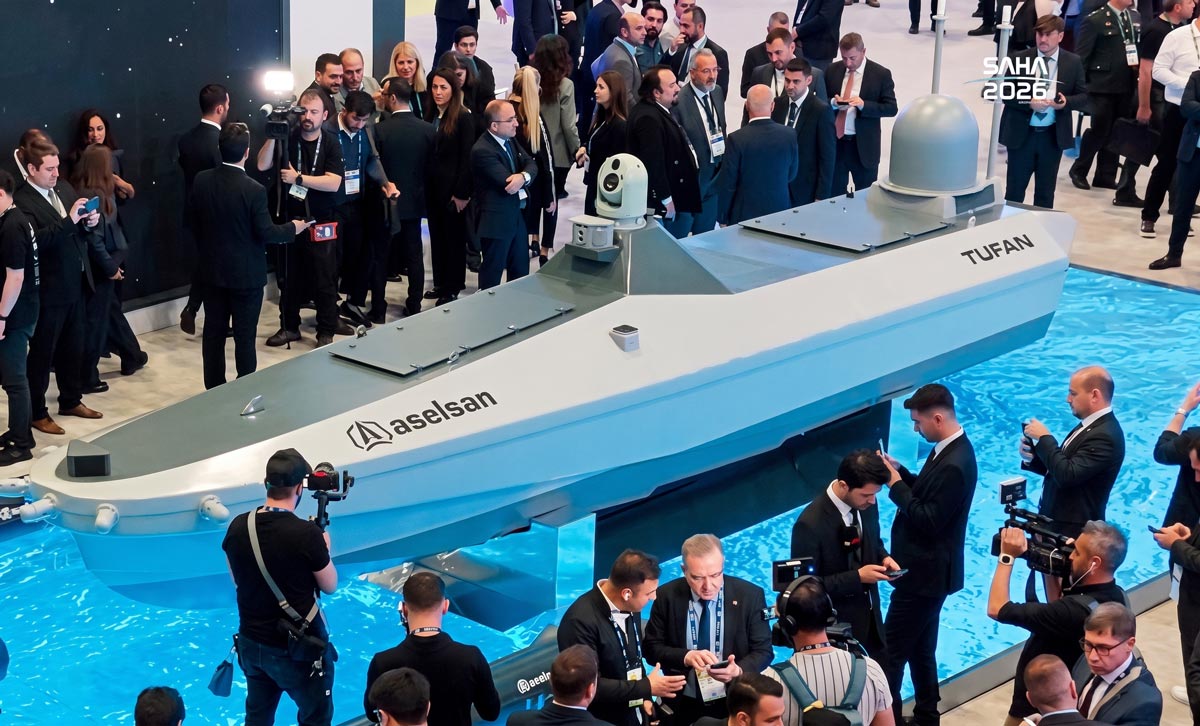
Turkish defense firm ASELSAN on Tuesday unveiled two next-generation autonomous naval strike systems — the KILIÇ kamikaze autonomous underwater vehicle and the TUFAN unmanned surface vehicle — at SAHA EXPO 2026 in Istanbul, in a move aimed at strengthening the deterrence capabilities of the Turkish Navy.
The systems were introduced during a ceremony at the Istanbul Fair Center attended by senior defense officials, including Deputy Defense Minister Bilal Durdalı and Naval Forces Commander Ercüment Tatlıoğlu. Speaking at the event, Tatlıoğlu said, “As of today, we are receiving the kamikaze unmanned surface vehicle and the unmanned underwater vehicle from ASELSAN. These vehicles will further strengthen the power of our Navy.”
ASELSAN Chief Executive Ahmet Akyol described the KILIÇ family as Türkiye’s first kamikaze autonomous underwater platform, developed to deliver cost-effective, high-impact deterrence. “KILIÇ was developed to be incorporated into the inventories of our navy and friendly allied forces. While the R&D process continues, we are planning for serial production,” he said.
The TUFAN system is designed as an unmanned surface vehicle capable of carrying a warhead comparable to a heavy torpedo, operating autonomously and controlled via satellite links. Akyol said the platform is targeted to enter service in 2027, adding, “We are focusing on game-changing, deterrent capabilities.”
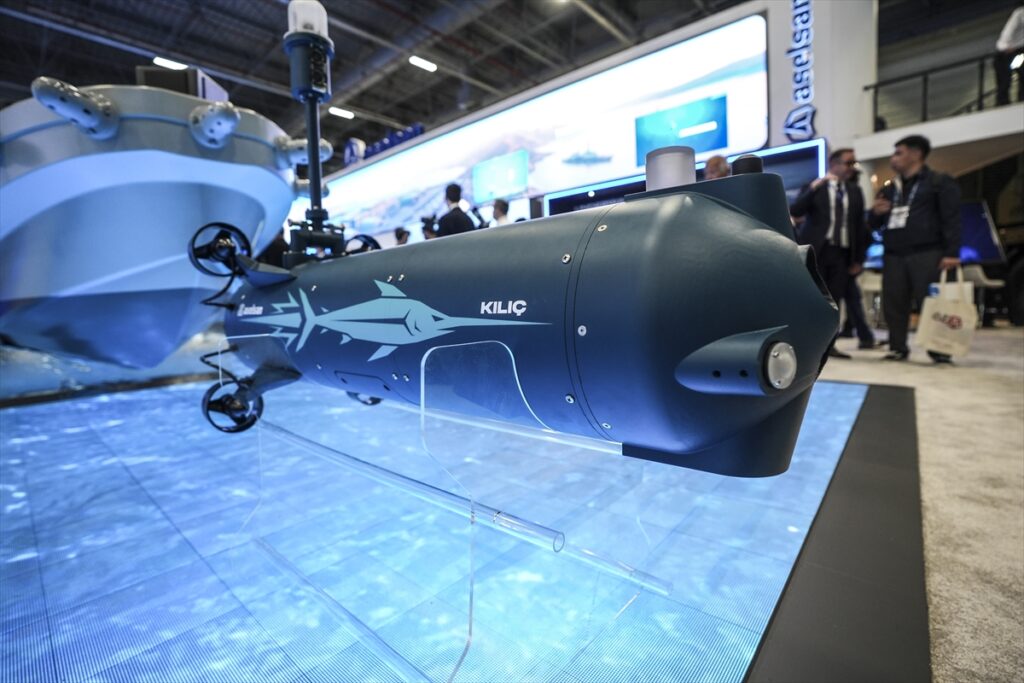
The KILIÇ 10 variant is a single-use, ultra-lightweight underwater platform featuring a compact, low-visibility hydrodynamic design optimized for asymmetric naval warfare. It supports high-precision strike, swarm operations, cable-guided control, and reduced detectability.
A larger variant, KILIÇ 200, offers extended range and increased payload capacity, with integration options for unmanned surface vehicles and advanced sensor suites to expand mission reach.
TUFAN is designed to operate in coordinated swarm formations and incorporates image-based target recognition and autonomous obstacle avoidance. The platform is intended for strike missions against both surface targets and coastal infrastructure.
Analysts say autonomous and swarm-enabled systems such as KILIÇ and TUFAN are reshaping naval force structures by providing relatively low-cost but high-effect capabilities. These systems are viewed as force multipliers that complement conventional naval assets and support Türkiye’s maritime strategy under the “Blue Homeland” doctrine.