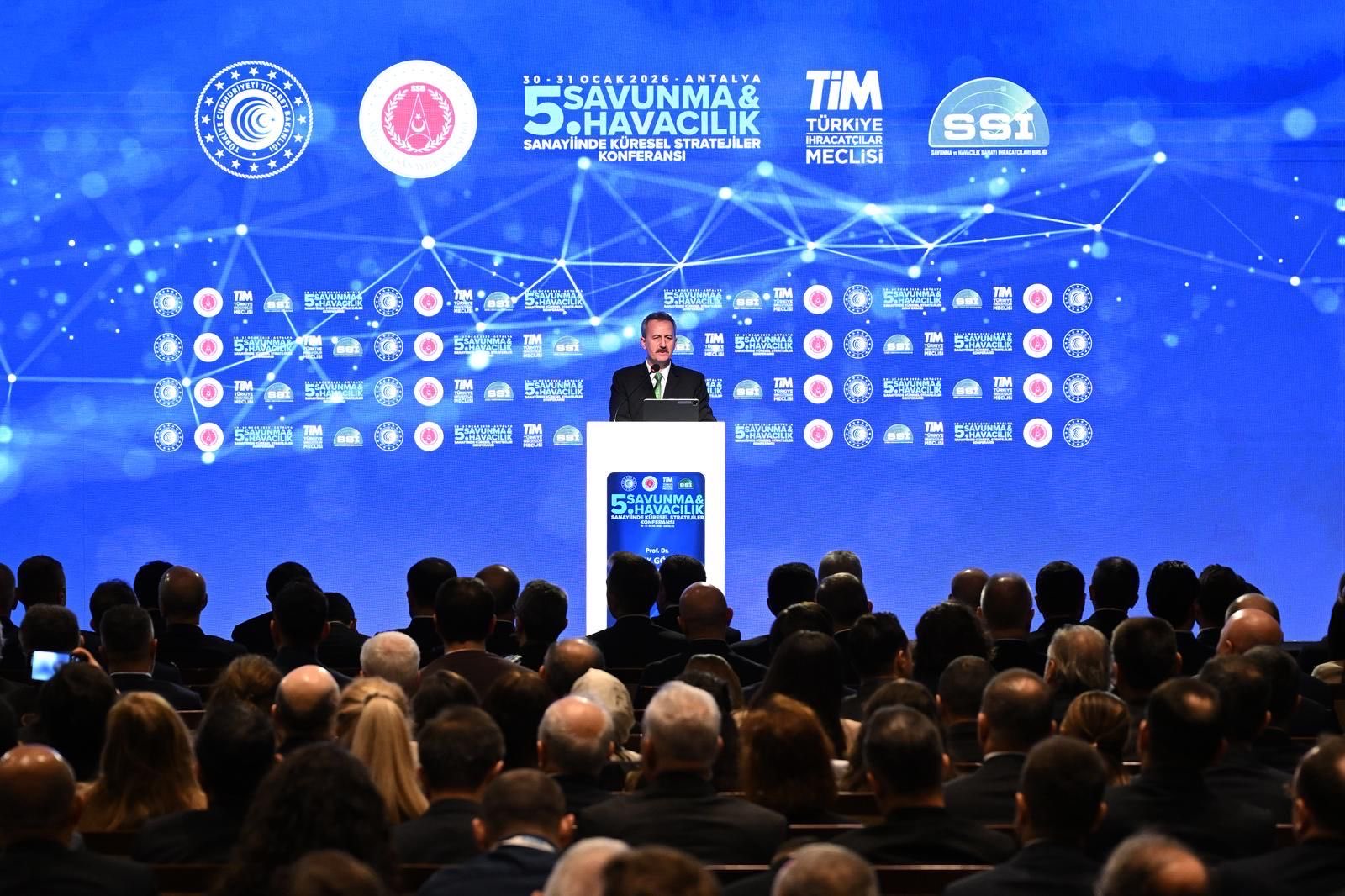
The 5th Global Strategies Conference on Defense and Aerospace Industry, held in Antalya under the leadership of the Presidency of Defense Industries, highlighted Türkiye’s transformation from a defense importer into a global technology supplier.slotbar affiliate
Speakers emphasized that the Turkish defense industry exceeded $10 billion in exports in 2025, while newly signed contracts reached $17.9 billion, underscoring Ankara’s push toward “full independence” in defense technologies and its growing role in shaping international standards.
From Strategic Dependence to Full Independence
Türkiye’s defense industry trajectory reflects a long-term shift driven by geopolitical necessity and technological ambition. From naval platforms paid for but never delivered before World War I, to embargoes following the Cyprus Peace Operation, Ankara’s experience with supply restrictions accelerated its push for domestic capabilities.
Today, Türkiye exports defense products to 185 countries, marking one of the most tangible pillars of the “Century of Türkiye” vision.
Beyond $10 Billion: Contract Momentum Accelerates
2025 marked a psychological and economic turning point for the sector. Defense and aerospace exports reached $10.54 billion, a 48% year-on-year increase.
More significantly, new contracts totaled $17.9 billion, up 79%, signaling sustained global demand rather than short-term sales momentum.
Haluk Görgün noted that export sustainability now depends on converting contracts into deliveries, expressing confidence that exports will continue to set new records as production schedules advance.
From Importer to Technology Supplier
Türkiye’s export footprint is expanding beyond traditional partners to advanced Western markets:
- Spain signed a landmark agreement for the HÜRJET jet trainer.
- Portugal procured a Maritime Supply and Logistics Support Ship, restoring Türkiye’s prestige in naval exports.
- Italy and Poland became focal points through **Baykar’s partnership with Leonardo, the acquisition of Piaggio Aerospace, and **ASELSAN’s electronic warfare exports to Poland.
- Syria, following partial stabilization, emerged as a regional market for integrated defense support packages coordinated with the Syrian Ministry of Defense.
Government-to-Government (G2G) Model Gains Momentum
The Government-to-Government (G2G) export model, expected to become fully operational in 2026, introduces direct state guarantees for exported defense systems.
This framework is designed to reduce legal and financial risks, particularly enabling SMEs to compete internationally alongside prime contractors, while broadening Türkiye’s export base.
Dual-Use Technologies and Civilian Spillover
Türkiye aims to replicate global defense giants by transferring mature military technologies into civilian sectors, including healthcare, transportation, cybersecurity, and disaster management.
Vice President Cevdet Yılmaz highlighted the need to elevate domestic civilian production to defense-industry standards, particularly in healthcare technologies.
Per-Capita Export Targets and NATO Window
Per-capita defense export revenue has risen from $45,000 to over $100,000, though analysts identify $300,000 as the global competitiveness threshold. ARCA Defense already exceeds this benchmark with $750,000 per capita exports.
Türkiye’s young engineering workforce—averaging in their 30s—provides a structural advantage as NATO moves to raise member defense spending toward 5% of GDP, potentially unlocking an additional $50 billion annually in defense demand.
2025 Defense and Aerospace Export Champions Announced
During the conference, the 2025 Defense and Aerospace Industry Export Champions Awards were presented, highlighting both prime contractors and SMEs across multiple domains:
- Military Electronics & Radars: ASELSAN; Boğaziçi Defense Technologies
- Naval Platforms: ASFAT; HAVELSAN; Meteksan Defense; Akana Marine Technologies (SME)
- Land Systems: OTOKAR; Nurol Makina; BMC; Menatek Defense (SME)
- Aircraft & Engines: TUSAŞ; TEI; Alp Aviation; Aksa Advanced Composites (SME)
- UAVs: Baykar; TUSAŞ; STM; BMS Defense Technologies (SME)
- Missiles & Rockets: ROKETSAN; Sinerji High Technology (SME)
- Weapons & Ammunition: ARCA Defense; Samsun Yurt Defense; MKE; Bahtiyar Hunting Equipment (SME)
Officials stressed that the diversity of award winners confirms a sustainable, export-driven ecosystem rather than reliance on a limited number of firms.
Türkiye’s defense vision now extends beyond land, sea, and air. Space systems, advanced electronic warfare, and AI-enabled autonomous platforms are emerging as the next strategic domains.
The Antalya conference underscored that Türkiye’s transformation—from unmet deliveries to global system exports—is no longer aspirational, but structurally complete.