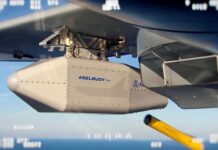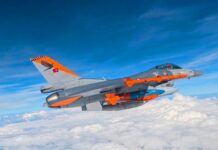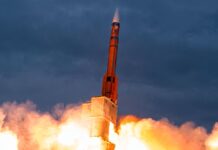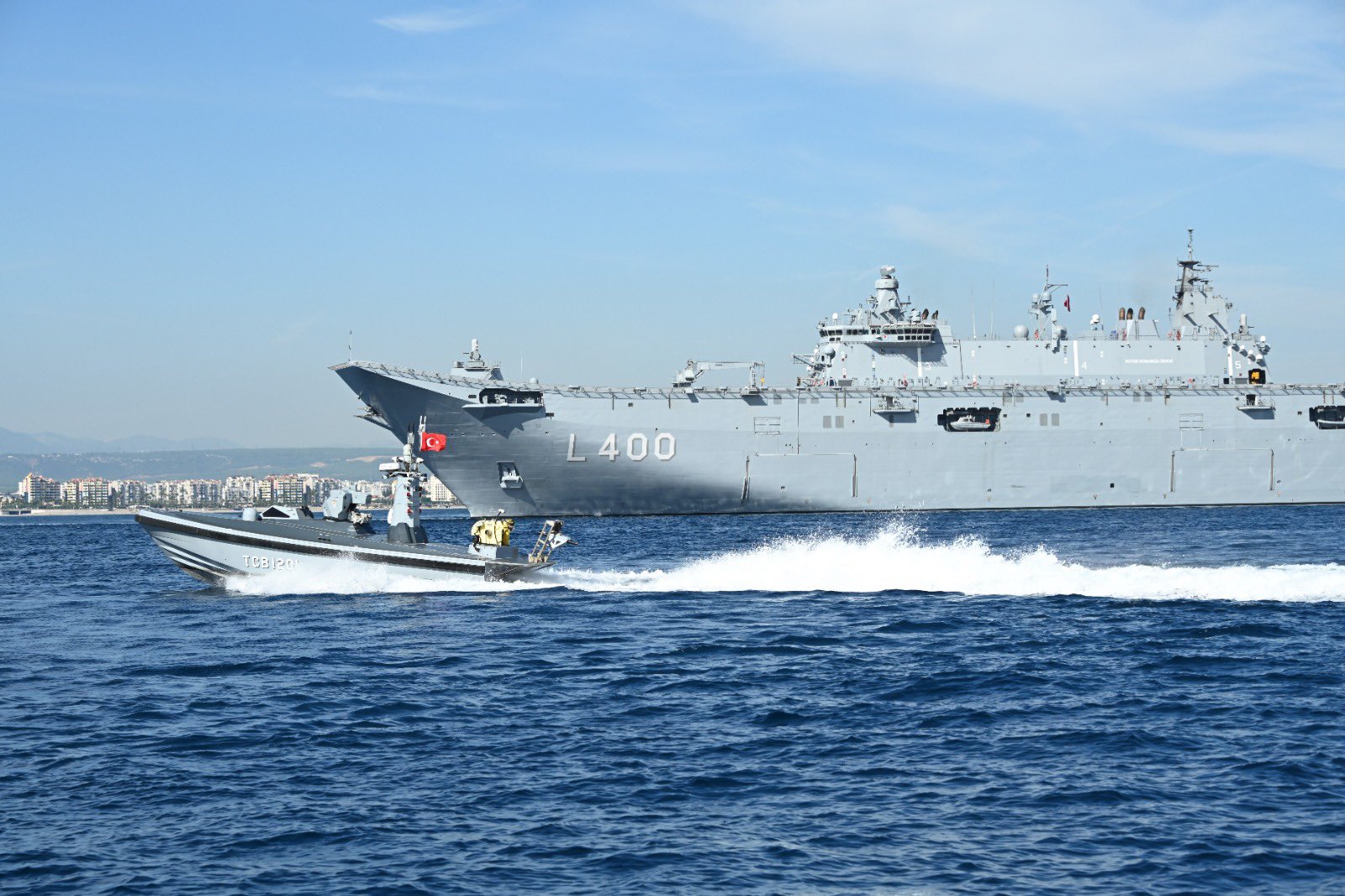
The TOLGA close-in air defense system built by the Machine and Chemical Industry Corporation (MKE) destroyed drone and unmanned surface vessel targets on Sunday in its first firing from a warship, during the Turkish Navy’s TURNAs-2026 unmanned maritime systems exercise off Antalya.
In the same exercise, MKE’s PİRANA kamikaze unmanned surface vessel (USV) struck a surface target while under the control of a Bayraktar TB2, and STM’s TUNGA-X interceptor drone shot down a simulated enemy unmanned aerial vehicle (UAV) in flight.
The firings took place on Oct. 25, the exercise’s Distinguished Observers’ Day, off Sarısu Beach in the Konyaaltı district of Antalya. Navy Commander Adm. Ercüment Tatlıoğlu and Deputy Minister of National Defense Bilal Durdalı watched from the site.
Directed by the Naval Forces Command, the National Unmanned Maritime Systems Exercise involved 18 ships, 11 aircraft, 41 systems from 17 defense companies and about 1,300 personnel. It runs until Oct. 27.
TOLGA fires from TCG BEYKOZ
MKE integrated TOLGA’s 20 mm twin-barrel revolver gun on TCG BEYKOZ. During the exercise the system destroyed a first-person-view (FPV) drone and a kamikaze USV.
A stabilization system keeps the gun on target from a moving ship, and it can engage both air and surface threats.
- Rate of fire: 3,200 rounds per minute, which MKE said is three times that of comparable systems abroad
- Effective range: 1,000 meters with fragmentation anti-UAV ammunition
- Targets: kamikaze UAVs and surface threats within that range
MKE said it developed the ammunition under its Effective, Simple and Inexpensive (EBU) approach, aiming to keep the cost of defense down in scenarios involving high-volume attacks.
PİRANA strikes again under TB2 control
PİRANA, which carries a 100-kilogram warhead, destroyed its target while controlled through a TB2 drone. The vessel had earlier hit a surface target during the DENİZKURDU-I exercise.
- Speed: more than 40 knots
- Range: more than 200 nautical miles
- Communications: radio frequency (RF) and satellite communications (SATCOM)
- Control: remote or autonomous
A low radar cross-section and high maneuverability are meant to make the boat harder to detect. It can be used on single missions or as part of a swarm.
TUNGA-X intercepts drone in flight
TUNGA-X tracked its target in real time by combining radar cueing with image guidance and destroyed the simulated enemy UAV in flight, STM said.
STM designed the interceptor to protect critical facilities and military units from low-cost kamikaze drones. It works alongside UAV detection radars and tracks targets autonomously using image processing.
- Speed: up to 300 kilometers per hour
- Operating range: up to 25 kilometers
- Launch: vertical takeoff, with no launcher required, so it can operate from a range of platforms
- Day and night operation
Sonobuoy drops and loitering munition firings
Bayraktar TB3 and AKSUNGUR UAVs dropped sonobuoys during the exercise, and an ANKA-S launched a ŞİMŞEK-K kamikaze drone. Firings were also carried out with the ILGAR loitering munition system and the BAZNA kamikaze UAV.
The LÜFER unmanned underwater vehicle flew covert reconnaissance and surveillance missions. The scenario covered mine detection and clearance along the coast, reconnaissance of the amphibious objective area, and the reconnaissance and neutralization of an enemy coastal stronghold.
Unmanned ground and aerial vehicles were used in an urban combat serial, and personnel trained in recovering people who had fallen overboard. Observers were also shown the ADVENT, UFUK and TDR systems in use. The day ended with a pass of unmanned naval vessels.
Tatlıoğlu: “A historic exercise”
Tatlıoğlu said the exercise was being held for the first time and called it “a historic one for our Navy.” He said the scenario was the first to use unmanned aerial, surface, underwater and land vehicles at the same time.
“Future naval battles will be fought with unmanned vehicles,” he said.
Tatlıoğlu said the Turkish Navy ranks among the world’s leading navies in the use of UAVs and that its number of unmanned surface vessels is growing quickly. He added that the national aircraft carrier, which he said is scheduled to be launched next year, will carry unmanned surface vessels, boats and underwater vehicles as well as UAVs.
Results to feed into doctrine
The exercise was designed to evaluate how unmanned surface, underwater, air and amphibious platforms work together, and it tested autonomous and AI-supported mission planning algorithms. The Navy aims to fold the results into its concepts, doctrine and tactics.
The TOLGA and TUNGA-X firings point to the search for layered, low-cost countermeasures against cheap aerial and surface drones. Controlling PİRANA through a TB2 was a working example of one unmanned platform directing another in a joint operation.