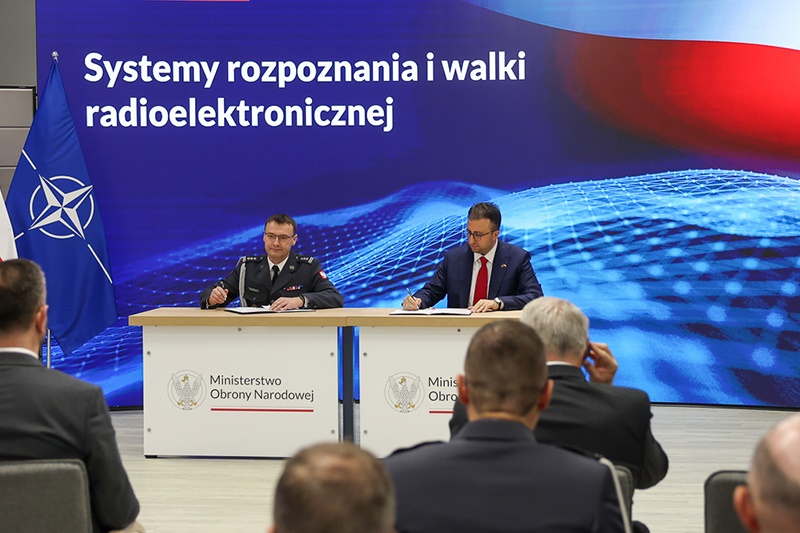
Türkiye’s export drive in the defense industry continues to deliver tangible results across Europe. ASELSAN has signed a contract worth approximately PLN 2 billion (around $550 million) with Poland for electronic warfare (EW) and anti-drone systems, marking a significant contribution to the security architecture of a NATO member state.
According to statements by the Polish Ministry of Defense and the Armament Agency, the contract with ASELSAN covers the supply of automatic recognition and jamming systems equipped with radio-electronic warfare (REW) capabilities.
The agreement includes:
- Electronic surveillance
- Electronic protection
- Electronic attack
Polish authorities stated that the systems will be deployed by tactical-level units, with deliveries scheduled to be completed by 2035. Officials underlined that both sides aim to finalize deliveries as early as possible.
Foundation of Poland’s Anti-Drone Defense Architecture
Polish Deputy Prime Minister and Defense Minister Władysław Kosiniak-Kamysz described the ASELSAN agreement as a critical first step in building Poland’s large-scale anti-drone defense network under the SAN Program.
Kosiniak-Kamysz noted that negotiations with the consortium selected by the Armament Agency are in their final phase, emphasizing the strategic importance of rapidly strengthening counter-UAS capabilities.
Three Major Defense Contracts Signed in One Day
On the same day, the Polish Ministry of Defense signed three separate defense procurement contracts with a combined value of approximately PLN 2.6 billion:
- SAAB (Sweden):
An electronic reconnaissance system contract worth about €130 million, integrating air and land platforms to detect radar and signal sources. Deliveries are planned through 2030. - ASELSAN (Türkiye):
Electronic warfare and anti-drone systems valued at approximately PLN 2 billion, with deliveries scheduled to conclude by 2035. - Autocomp (Poland):
Leopard 2PLM1 tank simulators worth around PLN 100 million, to be delivered between 2028 and 2029.
The Polish defense minister highlighted that conducting 70–80 percent of military training via simulators has become unavoidable for modern armed forces.
Emphasis on a “New Security Architecture”
Kosiniak-Kamysz stressed that these agreements form a cornerstone of Poland’s new security architecture within NATO, adding that cooperation with Türkiye and Sweden reinforces the defense line extending from the Baltic Sea to Eastern Europe.
According to data from the Polish Ministry of Defense, more than 200 defense contracts worth approximately PLN 250 billion have been signed over the past two years.