Türkiye has officially begun construction of its long-planned next-generation air defense destroyer, the TF-2000 Air Defense Destroyer, a key platform intended to strengthen the Turkish Navy’s regional air and missile defense capabilities at sea.
According to a report by Haber Global, the project has entered the first stage of production with steel-cutting operations, marking the start of the ship’s physical construction.
Once completed, TF-2000 destroyers are expected to serve as the maritime pillar of Turkey’s integrated air and missile defense architecture, providing protection for naval task groups and critical maritime zones.
Maritime Component of Türkiye’s “Steel Dome” Air Defense Architecture
Rear Admiral Recep Erdinç Yetkin, Commander of the Istanbul Naval Shipyard, said the TF-2000 destroyer is designed to function as the naval platform of Türkiye’s developing “Steel Dome” air defense architecture.
Speaking about the project, Yetkin emphasized that the ship is intended primarily for regional air and missile defense missions at sea.
According to Yetkin, once the TF-2000 enters service, the Turkish Navy will gain a significant capability to defend fleet formations and key maritime areas against aircraft, missiles, and other aerial threats.
96-Cell Vertical Launch System for Layered Air Defense
One of the most prominent features of the TF-2000 destroyer will be its 96-cell vertical launch system (VLS), enabling the vessel to deploy a large number of air-defense missiles simultaneously.
The system relies heavily on domestically developed missile and launcher technologies, with a significant portion of the infrastructure developed by ROKETSAN.
A smaller version of this vertical launch architecture is already in use aboard the TCG İstanbul frigate, currently serving in the Turkish Navy.
The expanded VLS capacity on the TF-2000 will allow the ship to provide area air defense for naval task forces, a capability considered essential for modern fleet operations.
Steel Cutting Marks First Construction Phase
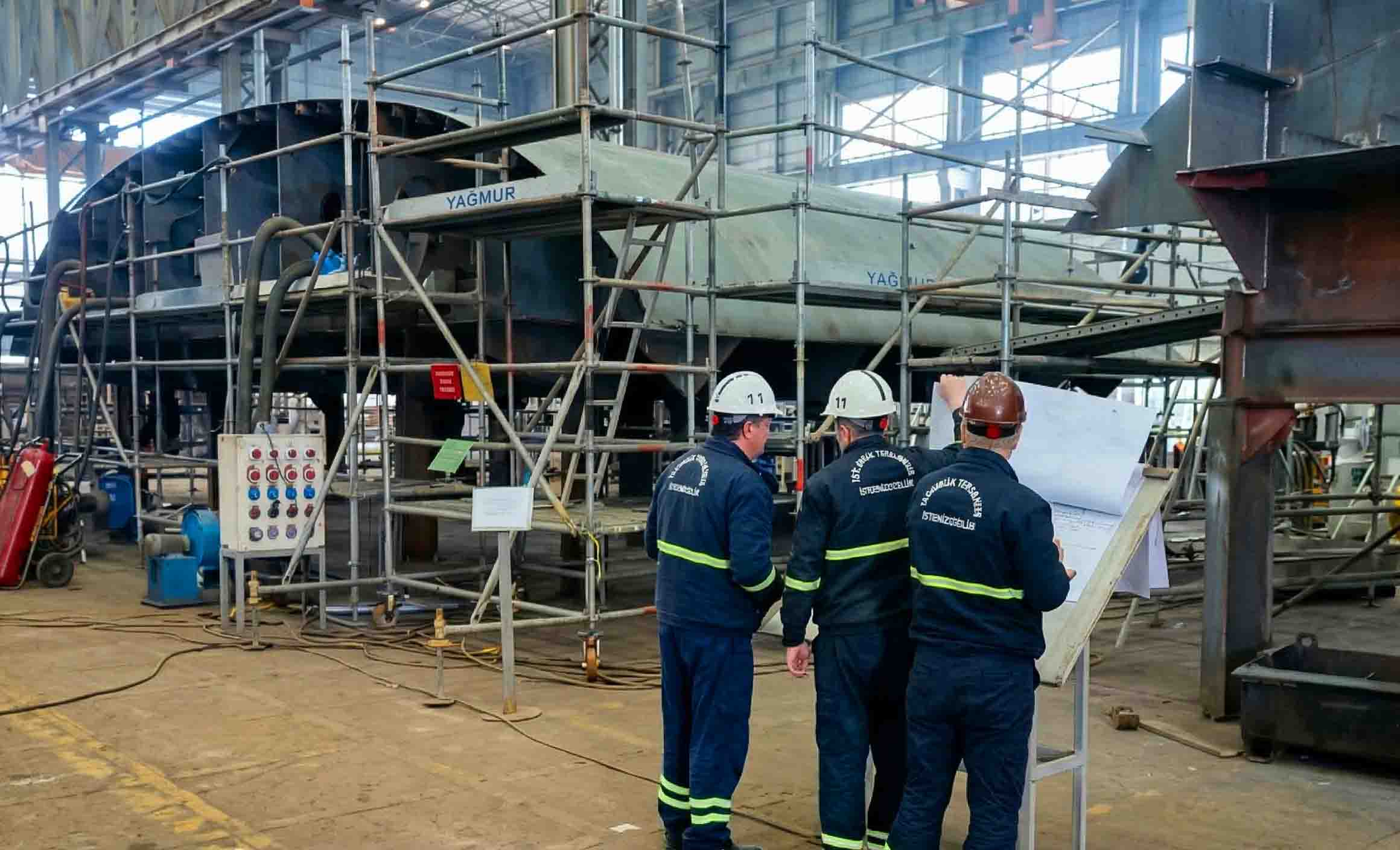
The TF-2000 project reached a critical milestone with the steel-cutting ceremony in Istanbul, which marks the beginning of the shipbuilding phase.
During this stage, the steel plates that will form the vessel’s hull are prepared using high-energy cutting technologies.
Kerem Orçun Yüksekdağ, Director of Marine Programs at ASFAT, stated that ASFAT is acting as the prime contractor for the project under a contract signed with Turkey’s Presidency of Defense Industries (SSB).
Yüksekdağ added that the ship’s first hull block will soon be placed on the slipway, marking the formal start of hull assembly.
Key Technical Specifications of the TF-2000 Destroyer
According to the project outline, the TF-2000 destroyer will feature:
- Length: 149 meters
- Displacement: Approximately 8,000 tons
- Maximum speed: Over 28 knots
- Vertical Launch System: 96 cells
- Primary role: Regional air and missile defense
The ship will be constructed from more than 60 individual hull blocks, which will be assembled on the shipyard slipway to form the final structure.
National Aircraft Carrier Project Moves Forward
Parallel to the TF-2000 program, Türkiye is also advancing work on its National Aircraft Carrier project, another major step in the country’s naval modernization effort.
Rear Admiral Yetkin confirmed that the design phase of the aircraft carrier has been completed and production activities have begun.
Construction of the vessel is currently underway at the Istanbul Naval Shipyard.
Yetkin described the carrier as a critical platform for expanding Turkey’s power-projection capabilities at sea.
Production Phase and Flight Test Infrastructure
According to Yetkin, the first production phase of the aircraft carrier—steel plate cutting—has already been completed.
The steel plates will be assembled into blocks, after which the ship’s hull will be constructed using the shipyard’s slipway system.
In parallel with the ship’s development, Turkey has also completed the flight-ramp test infrastructure that will be used to evaluate aircraft take-off operations.
This testing system is expected to be installed at a designated airport, where flight trials will be conducted.
Yetkin stated that the aircraft carrier is scheduled to be launched by the end of 2027.
Turkish Shipyards Expand Global Warship Production
Turkey has significantly expanded its warship production and export activities in recent years.
Turkish shipyards are currently:
- Building corvettes for Ukraine
- Constructing warships for Pakistan
- Producing an offshore patrol vessel for Romania
In addition, Turkish officials say a potential frigate sale to Indonesia is also under discussion.
Rear Admiral Yetkin noted that these projects not only support Turkey’s defense exports but also enhance interoperability with allied and partner navies.