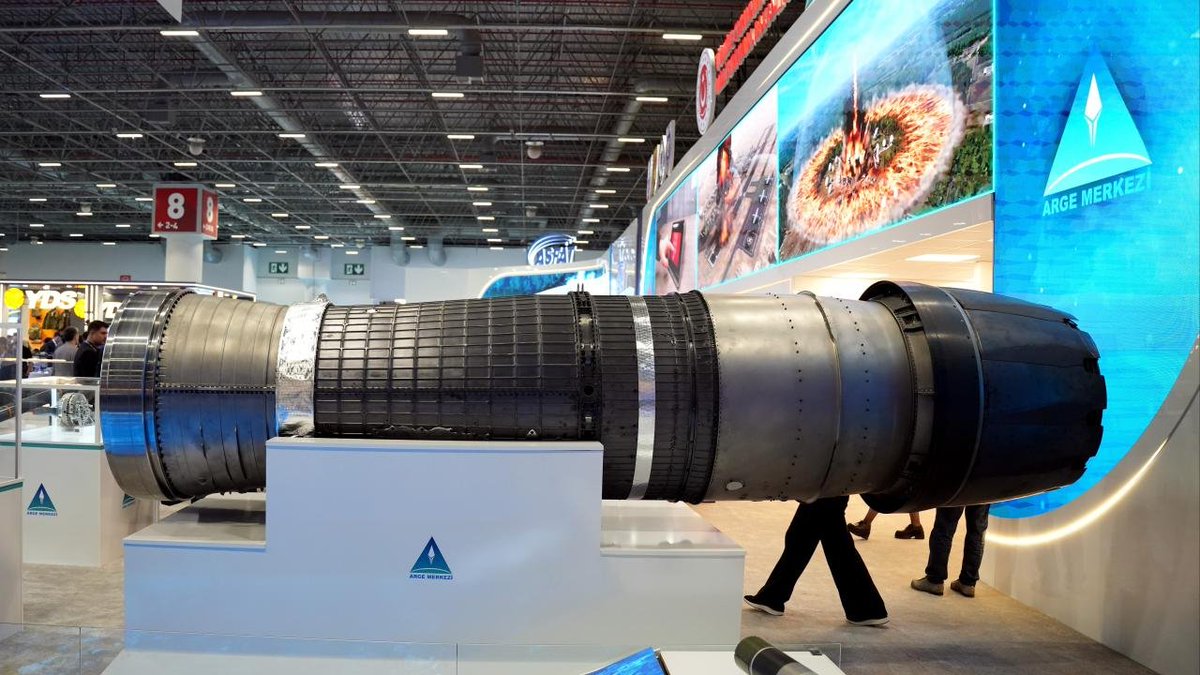
Türkiye’s Ministry of National Defense (MSB) unveiled the domestically developed GÜÇHAN turbofan jet engine during its weekly press briefing at the SAHA 2026 defense exhibition, marking a step toward reducing reliance on foreign propulsion technologies and advancing national aerospace capabilities.
Ministry Spokesperson Rear Admiral Zeki Aktürk said the engine was designed to deliver high thrust using entirely domestically developed components. “The GÜÇHAN Turbofan Jet Engine is a national jet engine with high thrust, all of whose components were developed by our Ministry’s R&D Center,” Aktürk stated, adding that the project focuses on technological development and domestic capacity rather than commercial returns.
According to the ministry, six prototype units have been produced so far, each delivering approximately 42,000 pounds-force (lbf) of thrust. Qualification testing is scheduled to take place within the year, with the results expected to inform future integration and production decisions.
The ministry noted that the use of single-crystal material technology enhances turbine component durability under high-temperature and high-stress conditions, improving both performance and operational lifespan. Such materials are considered critical for modern turbofan engines operating in advanced fighter aircraft and high-performance platforms.
Technical discussions following the unveiling highlighted key specifications, including an estimated fan diameter of 46.5 inches, airflow of 420 lb/s, and a bypass ratio of 0.68:1, positioning the engine within the high-thrust class typically associated with next-generation combat aircraft.
However, some engineering assessments raised questions about the program’s maturity, including whether the engine is a fully functional prototype or remains at the technology demonstration stage. Analysts also pointed to the need for further clarity on flight testing timelines, integration plans, and serial production pathways.
The relationship between GÜÇHAN and other domestic turbofan initiatives, particularly the TF35000 program led by Turkish Engine Industries (TEI), also drew attention, with experts noting potential challenges related to institutional coordination and resource allocation.
Industry specialists emphasize that modern turbofan development extends beyond thrust output, focusing on advanced turbine blade manufacturing, high-temperature materials, cooling architectures, and consistent mass production quality. These factors are seen as decisive for long-term operational viability and export potential.
The unveiling has generated significant interest within defense and engineering communities, with observers noting that the engine could provide a strategic foundation for Türkiye’s national fighter aircraft programs and future air platforms. Its long-term impact, however, is expected to depend on verified test results, performance validation, and successful integration into operational systems.