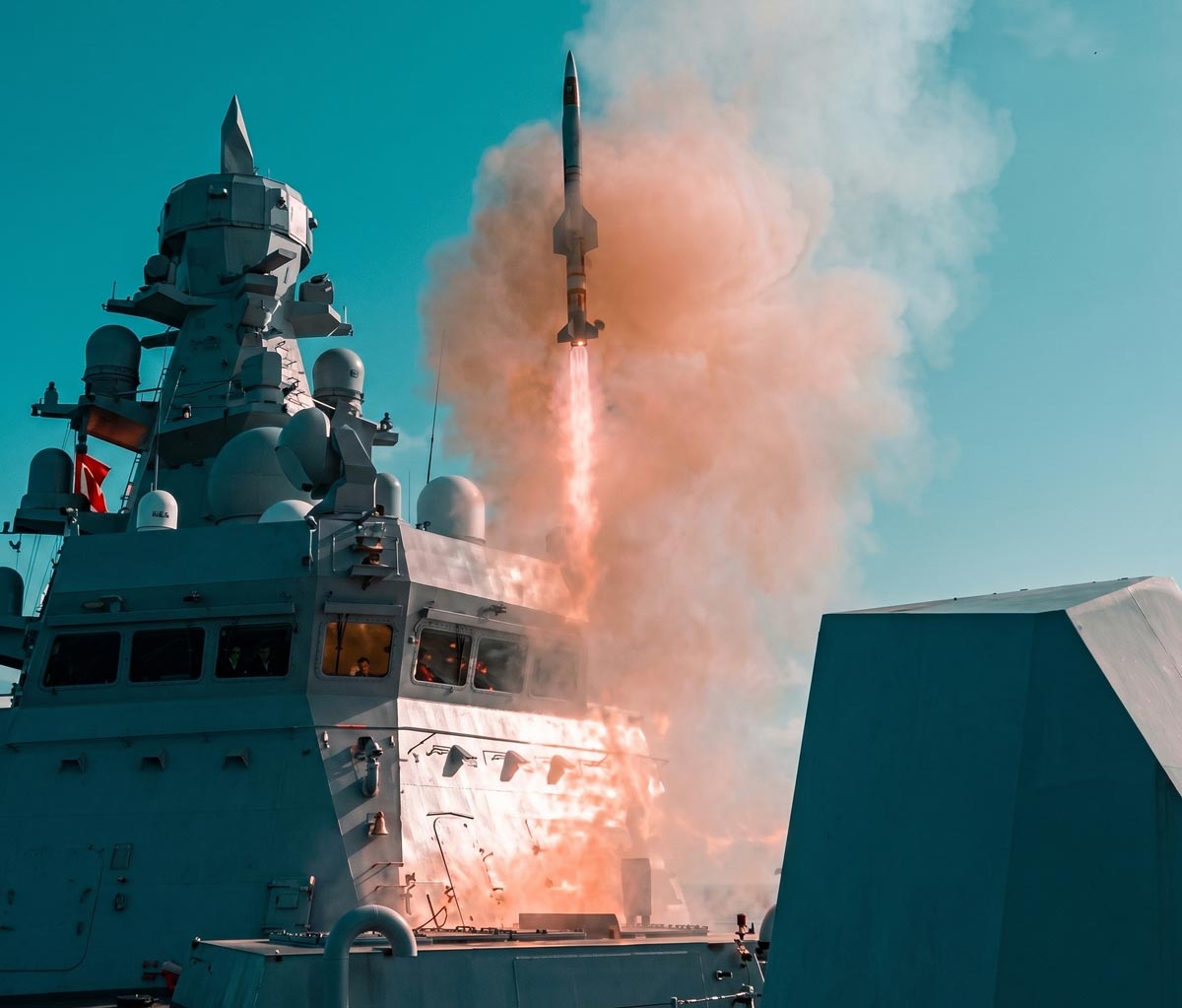
ROKETSAN said its HİSAR-D RF air defense missile successfully struck targets at 10 meters and 800 meters during a live-fire test conducted from the TCG İstanbul using the MİDLAS vertical launch system, demonstrating effectiveness against low-altitude threats. The company described the system as “the unwavering guardian of our skies,” adding that the test reaffirmed its reliability.
“Our HİSAR-D RF Air Defense Missile, launched from the TCG İstanbul via the MİDLAS system, once again proved its reliability by hitting its targets with pinpoint accuracy during live-fire test activities,” ROKETSAN said in a statement. “With our systems that have proven themselves in the field, we continue to strengthen our military’s capabilities.”
The engagement of low-altitude targets, a challenging profile for detection and interception, underscores the missile’s role in countering threats such as cruise missiles and unmanned systems. The test follows earlier milestones in the program, including initial ground-based firing in 2022 and the first sea-based launch in 2024.
HİSAR-D RF is a medium-range, medium-altitude air defense missile equipped with an active radar seeker, enabling fire-and-forget engagement. The seeker allows the missile to guide itself to the target using onboard radar, supporting operations in adverse weather and electronic warfare environments.
The missile is deployed via the 16-cell MİDLAS vertical launch system, also developed by ROKETSAN. The system is designed for multi-munition capability, supporting integration of platforms such as ESSM, ATMACA, and SİPER, with plans to expand to cruise missiles, anti-ship weapons, and torpedoes.
A 2025 firing that destroyed an unmanned aerial vehicle target indicated the system is approaching operational maturity. Analysts say the latest results strengthen the Turkish Navy’s layered air defense architecture and could support the future integration of longer-range ship-based systems.