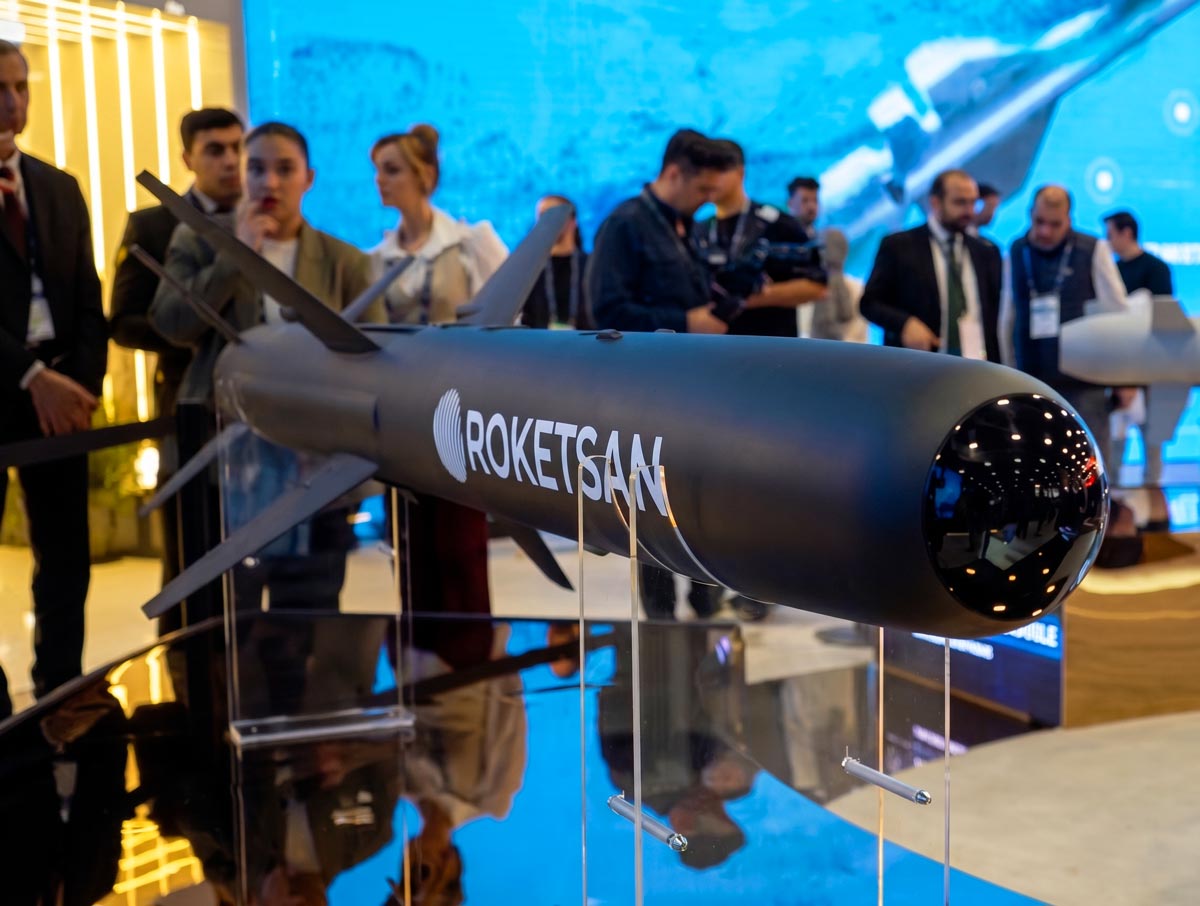
Turkish defense manufacturer ROKETSAN announced that its next-generation CİDA anti-tank missile has entered mass production following the completion of firing tests, positioning the system as a new beyond-line-of-sight (NLOS) strike capability for modern battlefields. Unveiled during the SAHA Expo, the missile is designed to conduct long-range precision engagements from protected positions through real-time operator guidance and multi-platform integration.
According to ROKETSAN General Manager Murat İkinci, the CİDA was developed around an architecture that does not require operators to maintain direct visual contact with the target. The missile transmits live imagery from its seeker head through a dedicated data-link infrastructure, enabling operators to guide or update targets during flight.
“This system represents a transition to a different segment, distinct from the existing anti-tank family,” İkinci said. “With its new datalink technology, imaging system, and guidance system, CİDA represents a transition to a different segment, distinct from the existing anti-tank family (Karaok, OMTAS, UMTAS, etc.).”
The system incorporates the “Man-in-the-Loop” operational concept, allowing operators to intervene during flight and redirect the munition if necessary. Defense analysts say such capabilities are increasingly critical in network-centric warfare environments, where survivability and stand-off engagement ranges are prioritized.
ROKETSAN stated that the missile achieved a range exceeding 55 kilometers in air-to-ground engagements and more than 35 kilometers in ground-to-ground missions during tests. The company said the capability could allow forces to neutralize armored targets before they approach the line of contact.
Defense specialists note that long-range NLOS anti-tank systems can expand operational depth while reducing the exposure of launch platforms to hostile fire. The capability is also viewed as increasingly relevant for distributed battlefield operations and asymmetric warfare scenarios.
The CİDA uses a warhead architecture derived from the UMTAS heavy anti-tank missile already in operational service. The company said the approach was intended to reduce development risk while preserving lethality against armored targets.
ROKETSAN also stated that the missile features post-launch re-targeting capability through its next-generation data-link system. The feature enables operators to update target coordinates or redirect the missile after launch, increasing flexibility in dynamic combat environments.
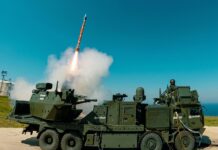
The missile was developed with a modular integration architecture compatible with multiple platforms, including the T129 ATAK attack helicopter, armored land vehicles, and unmanned ground systems. Defense observers assess that multi-platform compatibility could enhance joint-force operations while lowering logistical complexity.
Industry analysts further note that the integration of NLOS munitions with unmanned systems may act as a force multiplier on future digital battlefields, particularly in contested environments where manned platforms face elevated risks.
According to company data, the CİDA’s performance characteristics place it in direct competition with the Israeli-made Spike NLOS missile system, one of the most advanced NLOS weapons currently fielded. Originally conceived for short-range and urban warfare operations, the program evolved into a deep-strike capability through the incorporation of advanced propulsion, seeker, and guidance technologies.
ROKETSAN said additional validation trials would continue in the coming period, including tests under electromagnetic jamming conditions and harsh climatic environments.