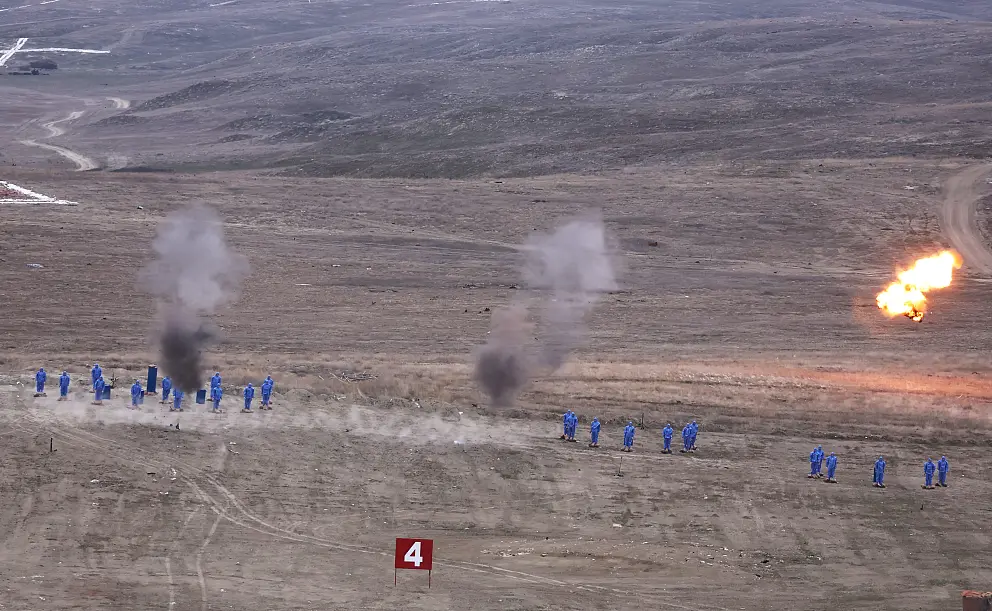
STM, one of Türkiye’s leading defense engineering companies, has reached a major milestone in swarm unmanned aerial vehicle (UAV) technology after 20 KARGU strike UAVs successfully hit designated targets during a live-fire test.
The test marked the first time a swarm UAV capability in Türkiye was demonstrated using live ammunition under operational conditions, highlighting the maturity of STM’s autonomous swarm systems.
First Operational Swarm Test with Live Ammunition
The test was conducted at the General Nahit Şenoğul Firing and Training Range in Ankara’s Polatlı district. During the exercise, KARGU UAVs operated in an environment involving explosive munitions for the first time.
Developed entirely with national algorithms and software, the KARGU swarm employed a distributed swarm intelligence architecture. Controlled by a single operator, the UAVs autonomously took off and proceeded to the mission area without centralized control.
Autonomous Sub-Swarms and Simultaneous Engagement
After reaching the target zone, the KARGU drones autonomously divided into sub-swarms assigned to three separate targets. Acting on a single command from the operator, the system carried out simultaneous attacks, demonstrating high-precision engagement capabilities.
Equipped with anti-personnel warheads, the UAVs communicated with each other in real time to share target data, maintain mission continuity, and ensure operational reliability throughout the live-fire exercise.
Observed by Senior Military Leadership
The test was observed by senior military officials, including Defense Industry President Prof. Dr. Haluk Görgün, Army Training and Doctrine Commander Lt. Gen. Gültekin Yaralı, and 4th Corps Commander and Ankara Garrison Commander Lt. Gen. Ahmet Kurumahmut.
STM’s swarm UAV strike capability received positive assessments from the military command echelon following the demonstration.
STM Swarm UAV Capabilities
STM’s swarm UAV system is based on distributed intelligence and advanced autonomy, enabled by proprietary algorithms and nationally developed software. Tactical UAVs within the swarm can communicate in real time, detect and prioritize targets, and conduct coordinated swarm attacks.
Unlike centralized control systems, STM’s distributed architecture allows each UAV to make independent mission decisions. This ensures mission continuity even if individual UAVs are neutralized, significantly increasing operational resilience.
The system supports saturation attack concepts, allowing large numbers of UAVs to strike targets simultaneously in order to overwhelm enemy air defense systems. STM’s algorithms also enable UAVs to autonomously engage targets based on munition type, with the ability to distinguish between personnel and vehicle targets.
In addition, the swarm architecture allows UAVs to be added or removed during an ongoing mission, enables real-time mission updates, and supports the division of the swarm into multiple sub-swarms to carry out different tasks within the same operational area.