Türkiye’s low-altitude air defense system HİSAR-A, a key element of the integrated ÇELİKKUBBE Air Defense Architecture, has successfully struck its target during an acceptance test using a mass-produced imaging infrared (IIR) seeker missile, Turkish defense officials said.
The firing test was conducted with serial-production components, marking another milestone in the system’s transition to full operational readiness.
Acceptance Test Confirms Serial Production Readiness
Defense Industry President Haluk Görgün said the HİSAR-A system, which forms a critical layer of Turkey’s multi-tier air defense network, completed its acceptance firing using systems from the serial production line.
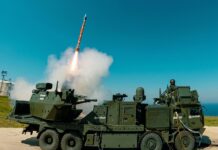
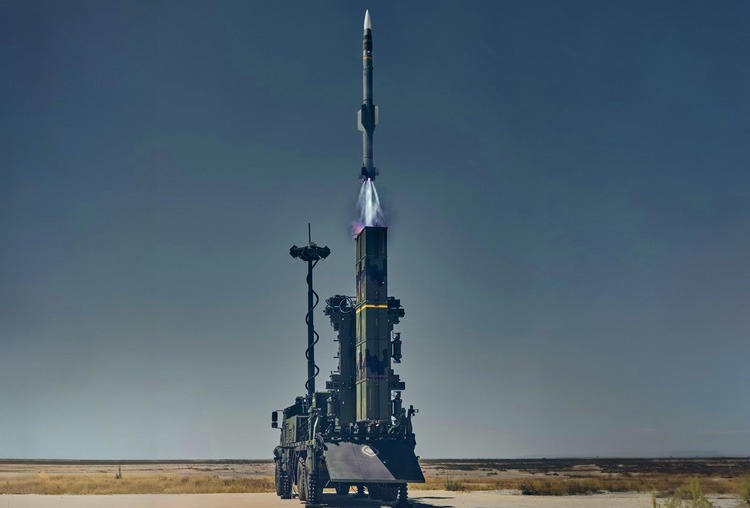
During the test, a high-speed aerial target was detected and tracked by the system’s Fire Control Device. The target was then engaged by an IIR seeker-equipped HİSAR-A missile launched from the Missile Launch System (FFS), resulting in a direct hit.
Officials said the successful firing confirms that the new-generation HİSAR-A FFS configuration and the serial production batch of IIR-guided missiles are now ready for operational deployment.
Strengthening Low-Altitude Air Defense
Görgün underlined HİSAR-A’s role in low-altitude air defense, describing the system as a foundational element of the layered ÇELİKKUBBE concept. “With its advanced sensors, guidance, and engagement capabilities, HİSAR-A continues to form the backbone of our low-altitude air defense and strengthens ÇELİKKUBBE’s deterrence in the field,” he said.
HİSAR-A Reaches Operational Maturity with A+ Configuration
Turkey’s HİSAR-A system has undergone a significant transformation with the transition from its initial prototype stage to the current HİSAR-A+ configuration, defense industry sources said.
The upgrade process has shifted HİSAR-A from a concept-validation platform into a fully inventory-focused combat system designed for sustained operational use.
From Prototype to Inventory System
Early HİSAR-A elements were deployed on wheeled platforms to validate the system’s ability to operate alongside armored units and counter low-altitude threats. While effective for testing purposes, these early versions had limited sensor integration, network connectivity, and production scalability.
The HİSAR-A+ configuration addresses these limitations by introducing enhanced missile technology, improved sensor fusion, and full compatibility with network-centric air defense operations.
Missile and Guidance Architecture Upgraded
One of the most significant changes in HİSAR-A+ is the adoption of the imaging infrared (IIR) seeker as the standard guidance solution. While earlier infrared seekers were primarily used for testing and validation, the IIR seeker significantly improves engagement success against small, fast, and highly maneuverable targets.
In the current configuration, missiles receive inertial and command guidance during the initial flight phase before switching to autonomous IIR guidance in the terminal phase. Defense officials say this hybrid guidance architecture substantially increases operational reliability.
Network-Centric Sensor and Fire Control Integration
HİSAR-A+ also features a new-generation Fire Control Device fully integrated with radar and command-and-control systems. This allows the system to engage targets not only detected by its own sensors but also those designated by higher-level air defense networks.
As a result, HİSAR-A+ operates not as a standalone system but as an integrated layer within Turkey’s broader air defense architecture.
Serial Production and Continuous Deployment
The Missile Launch System (FFS) has also been redesigned to support serial production and rapid deployment. The updated launcher configuration enables continuous operational use rather than limited test-range deployment.
Defense analysts note that while early HİSAR-A versions focused on proving feasibility, the HİSAR-A+ configuration demonstrates a permanent, scalable, and sustainable solution for Turkey’s low-altitude air defense needs.